REVIEW · PROVIDENCIALES
Fast-Track Kiteboarding Camp: Best for Beginners
Book on Viator →Operated by SUP Provo & Kite Provo · Bookable on Viator
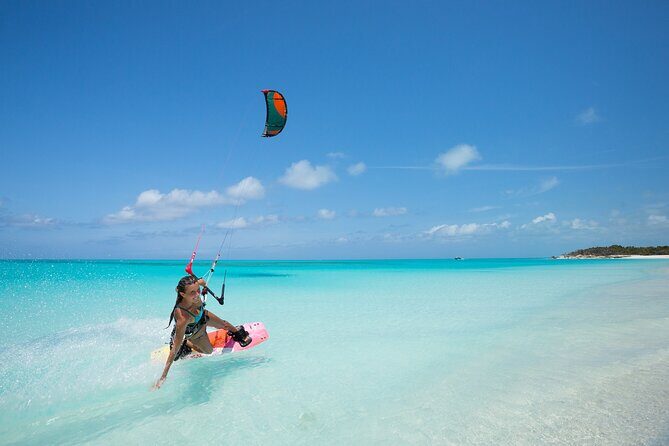
Your first kiteboard starts fast. This fast-track camp in Providenciales turns total beginners into board-starting basics in about 3 hours, with instructors from Kite Provo and a plan built around sand-to-water progression. I like that the lesson is semi-private (2 to 3 people), so you get real coaching instead of being “part of the crowd.” I also like that you have jet ski support included, which adds a safety net when you’re learning control in the water.
The main thing to factor in is timing: the exact start time depends on low tide, and the lesson also requires good weather, so expect some day-of variability.
In This Review
- Key Highlights You’ll Feel Immediately
- First Ride Goals: A 3-Hour Beginner Kiteboarding Plan
- Kite Provo Coaching and Why Semi-Private Matters
- Beach Time First: Teaching Aids, Gear Setup, and Kite Control
- In the Water: Relaunch, Safety Systems, Body Surfing, and Power Control
- Your First Waterstarts and Why Jet Ski Support Helps
- Price and Value: What $450 Buys You (and What It Doesn’t)
- Logistics That Matter in Turks and Caicos: Low Tide, Departure Times, and Weather
- What to Bring: A Simple Packing List for First-Timer Success
- Who This Fast-Track Camp Is Best For
- Should You Book This Fast-Track Kiteboarding Camp?
- FAQ
- How long is the kiteboarding camp?
- How much does it cost?
- What’s the minimum age and weight?
- Is equipment provided?
- Where do we meet?
- What if I don’t get the exact time I want?
- Is food included?
Key Highlights You’ll Feel Immediately
- Semi-private group size of 2–3 people, geared to first-timers
- All equipment included, so you can show up and focus on learning
- Jet ski support included, helpful when things get messy during early control
- Teaching aids on the beach to speed up what you learn before you enter the water
- Full first-lesson progression, from kite control to waterstarts
- Multiple departures across the day, with your exact time messaged after booking
First Ride Goals: A 3-Hour Beginner Kiteboarding Plan
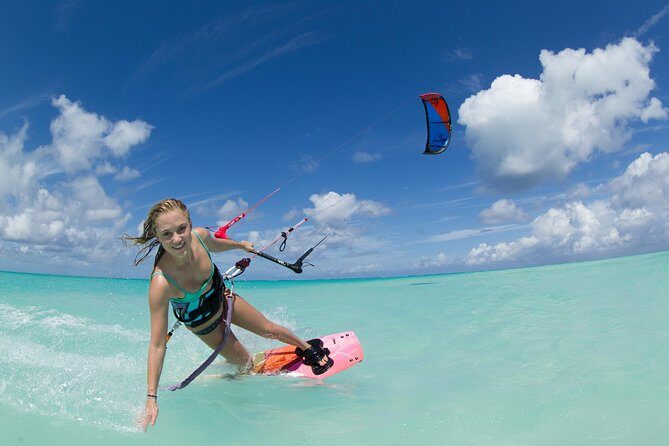
If you’re new to kiteboarding, the hardest part is not the board. It’s learning how the kite’s power works, where to stand, and how to move at the exact moment your kite is cooperating. This camp is designed around that reality. In one session, you go from no skills to your first exciting starts on the board.
The lesson runs about 3 hours, which is long enough to teach you the sequence without dragging you through repetitive basics. That matters, because kiteboarding is gear-heavy and skills build in steps. A short, focused session also helps you stay calm. You’re not spending the whole day in “practice mode” without knowing why you’re practicing.
You’ll also notice the camp’s structure is built to reduce wasted time. You start with teaching aids on the beach, then move into water tasks in an order that makes sense: control first, then relaunch and safety, then power management, and finally board starts.
You can also read our reviews of more tours and experiences in Providenciales.
Kite Provo Coaching and Why Semi-Private Matters
This is run by SUP Provo & Kite Provo, and the kiteboarding side is Kite Provo, founded in 2006 with roots going back to the beginning of the sport. The practical value of that kind of history is simple: they’ve taught beginners many times, so the lesson plan tends to be efficient.
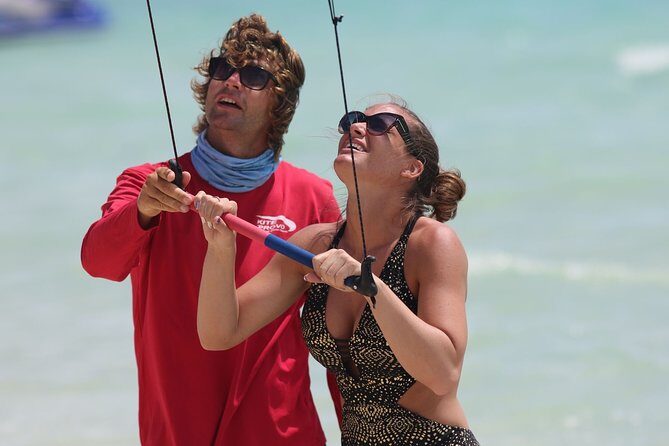
You’ll be in a small group with two to three people. That’s the big difference between “a class” and “a coaching session.” With fewer people, instructors can watch what your arms and legs are doing, correct you fast, and keep the whole group moving without waiting for the slowest moments.
It shows up in the reviews, too. People highlight instructors like Alan for being thorough, patient, and encouraging. Others mention Mike and the way he worked at a pace that helped them actually build control, not just survive the session.
One more detail that matters: the instructors are trained in communication. Kiteboarding is intense and sometimes confusing for first-timers. Clear cues and calm explanations can be the difference between feeling overwhelmed and feeling like you’re making progress.
Beach Time First: Teaching Aids, Gear Setup, and Kite Control
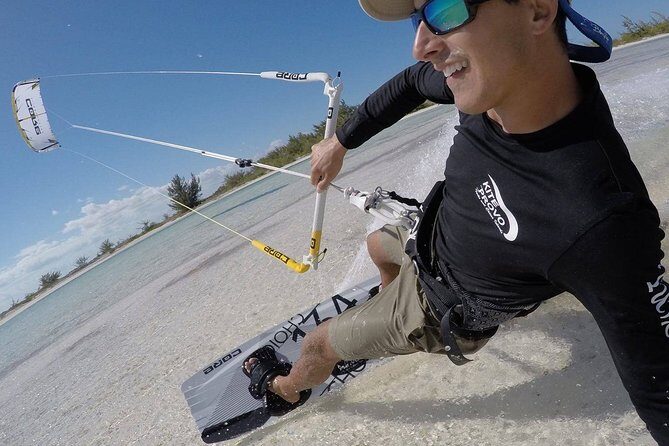
A good kiteboarding lesson does not throw you into the water as your first move. Here, you begin on the beach with tools and coaching that help you get your bearings fast.
You’ll learn how to set up all the gear. That might sound purely logistical, but it’s actually skill-building. When you understand what each piece does, you stop guessing. You also learn how everything is connected, so later safety steps feel less like random instructions.
Then you go into kite control using teaching aids. The goal is not to impress anyone. The goal is to understand the basic relationship between kite position, wind, and power.
Expect instruction on:
- How to get the kite flying without chaos
- How to keep it stable enough to learn
- How to use your body and stance to manage the kite’s behavior
You also need this part because later tasks build directly on it. If you skip or rush the kite control basics, waterstarts become a bigger gamble.
In the Water: Relaunch, Safety Systems, Body Surfing, and Power Control
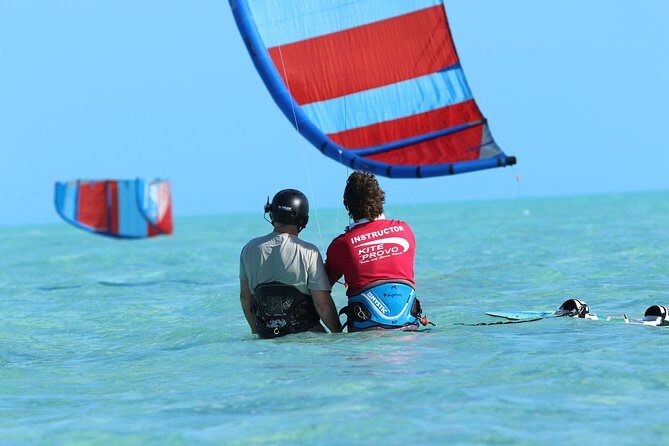
Once you’re in the water, the lesson stays structured and skill-based. You’re not just “free riding” behind a kite. You work through specific stages that teach you how to respond when the kite isn’t perfect.
Here’s what you’ll cover in the water:
- In-water kite control: taking what you learned on land and applying it with the added complexity of water movement.
- How to relaunch the kite: this is key for real-world learning. Beginners often panic when the kite drops. You’ll practice the process so you’re not stuck.
- Use of all safety systems: you’ll learn how the safety elements work and how to apply them in a controlled way.
- Body surfing: it’s not just fun. It helps you get comfortable with how you move with the kite overhead, without the full pressure of boarding immediately.
- Controlling the amount of power: this is where you start turning kite control into actual kiteboarding skill. You learn how to dial power up and down instead of getting dragged along.
If you’re worried about feeling stuck or overwhelmed, this step-by-step sequence helps. You always know what the next goal is, and each skill supports the next one.
The camp also notes you must be able to stand and walk, which is why the session is tied to low tide. That detail is practical. If you’re learning in water that’s too deep to stand comfortably, early instruction gets harder and more frustrating.
Your First Waterstarts and Why Jet Ski Support Helps
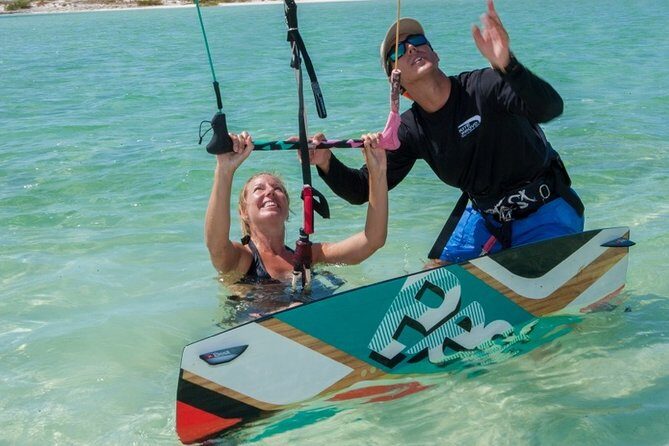
At the end, you work toward waterstarts, your first real board moments where you go from managing the kite to using the board like part of the system.
This is the moment most beginners are waiting for. But it’s also where many first lessons fail, because people try to board before they understand power control. This camp tries to prevent that by making the earlier steps count.
You’ll be learning how to:
- Match kite power to the right body position
- Get ready to stand and ride as the kite pulls correctly
- Build a sense of timing rather than relying on luck
The jet ski support included is a big confidence builder. Kiteboarding learning has moments where you don’t want to think about logistics. Support on the water helps keep the lesson moving and lets the instructor focus on coaching.
From a value standpoint, jet-ski support is also a signal: the operator invests in safety and learning speed, which is exactly what you want in a fast-track camp.

Price and Value: What $450 Buys You (and What It Doesn’t)
The price is $450 per person, and the total includes 12% government taxes. That’s a more “all-in” feeling number than some activities where taxes or add-ons appear later.
For value, the key is what you’re getting for that cost:
- A full beginner-to-first-waterstarts lesson
- All equipment included
- A semi-private format (2–3 people)
- Licensed instructors with a coaching focus
- Jet ski support included
- A lesson length of about 3 hours
What’s not included is also clear: food and drinks, plus no hotel pickup and drop-off. You meet at Swaying Palms on Joe Wood Drive in Leeward Settlement (TKCA 1ZZ), and the activity ends back at that same meeting point.
So you should budget for snacks and water on your own. If you’re new to kiteboarding, you’ll likely get hungry after exertion, and you’ll appreciate having a simple plan.
Logistics That Matter in Turks and Caicos: Low Tide, Departure Times, and Weather
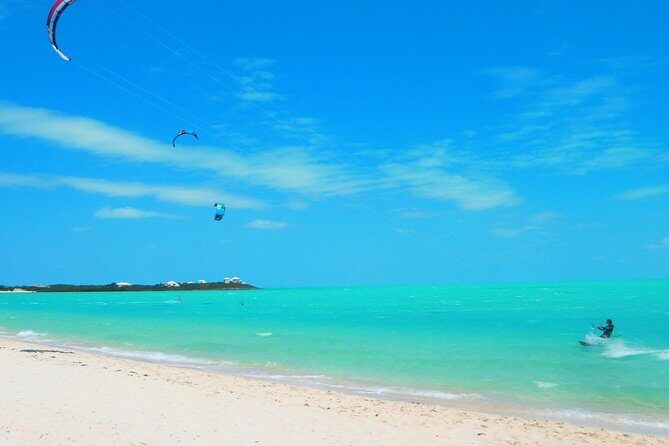
This camp has several departures throughout the day, but your exact lesson time isn’t fixed when you book. You’re messaged after booking with the specific start time, because the session depends on low tide for you to stand and walk during key learning parts.
It also requires good weather. Kiteboarding is wind- and conditions-dependent, and if weather is poor, you’ll be offered a different date or a refund. That flexibility is useful, but it does mean you shouldn’t build your tightest schedule around this single block unless you’re okay with changes.
Practical advice: when you plan your day, treat this as your “anchor activity.” Keep the rest of your schedule less rigid so you can shift if your exact time changes.
What to Bring: A Simple Packing List for First-Timer Success
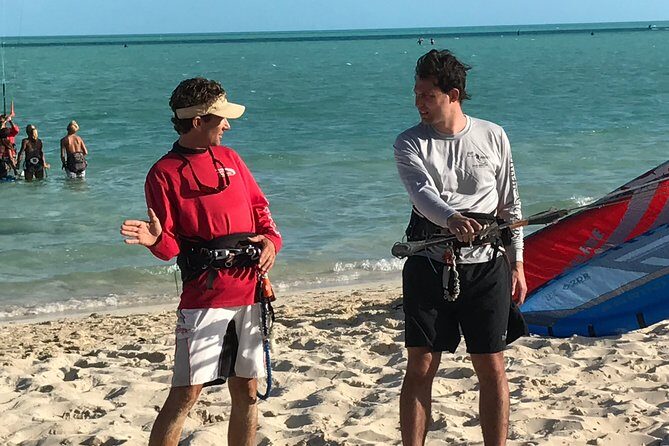
You don’t need to bring kiteboarding gear. The equipment for the lesson is included. Your job is to bring comfort and basic protection so you can learn without distractions.
I recommend packing:
- Sun protection (you’ll be outside the whole time)
- Water to stay hydrated
- Inexpensive sunglasses with a strap (glasses that stay put matter on the water)
- High-energy snacks like a power bar, dried fruits, or nuts
- Water shoes / neoprene booties are optional, and they’re not usually needed, but you can bring them if you prefer extra comfort
- Light, practical clothing you don’t mind getting sandy
Also, the lesson requires a moderate physical fitness level. You don’t need to be an athlete, but you should be prepared for active learning: water movement, kite control tasks, and body surfing.
Finally, there are minimums:
- Minimum age is 10 years
- Minimum weight is 80 lbs
- Maximum of 3 travelers, which supports the semi-private coaching focus
- Service animals are allowed
Who This Fast-Track Camp Is Best For
This camp is built for true beginners who want a fast path to a first board start. If you’re the kind of traveler who gets frustrated by slow learning curves, you’ll probably appreciate the structure: beach instruction first, then water skills, then waterstarts.
It can also be a good fit for small family groups or friends, because the setup supports learning without turning into a large class. One review example described a teen son, a pre-teen daughter, and an adult all learning with their instructor together, which hints at how the small group format works in real life.
You might want to consider a different setup if:
- You know you dislike being in the wind and water for a short, intense session
- You can’t realistically handle low-tide-dependent timing
- You’re expecting a long, multi-day progression. This is fast-track and focused, not a week-long coaching program.
Should You Book This Fast-Track Kiteboarding Camp?
I’d book it if you want your first kiteboarding lesson to feel purposeful, not random. The combination of semi-private coaching, all gear included, and a plan that targets kite control through to waterstarts is the kind of value that makes a single session count.
You should also book with eyes open if you hate scheduling around low tide or you’re traveling during uncertain weather windows. But if you can be flexible, this is a strong beginner option in Providenciales because it aims at the end goal quickly.
If your dream is to leave Turks and Caicos with at least one real start on the board, this is one of the better ways to make that happen in a single afternoon.
FAQ
How long is the kiteboarding camp?
The lesson lasts about 3 hours.
How much does it cost?
It’s $450.00 per person, and the price includes 12% government taxes.
What’s the minimum age and weight?
Minimum age is 10 years, and minimum weight is 80 lbs.
Is equipment provided?
Yes. All equipment needed for the lesson is included.
Where do we meet?
Meet at Swaying Palms, Joe Wood Drive, Leeward Settlement, TKCA 1ZZ, Turks and Caicos Islands. The activity ends back at the meeting point.
What if I don’t get the exact time I want?
Exact departure time varies daily and you receive the confirmed time after booking. It must be low tide in order to stand and walk.
Is food included?
No. Food and drinks are not included.